IRELAND
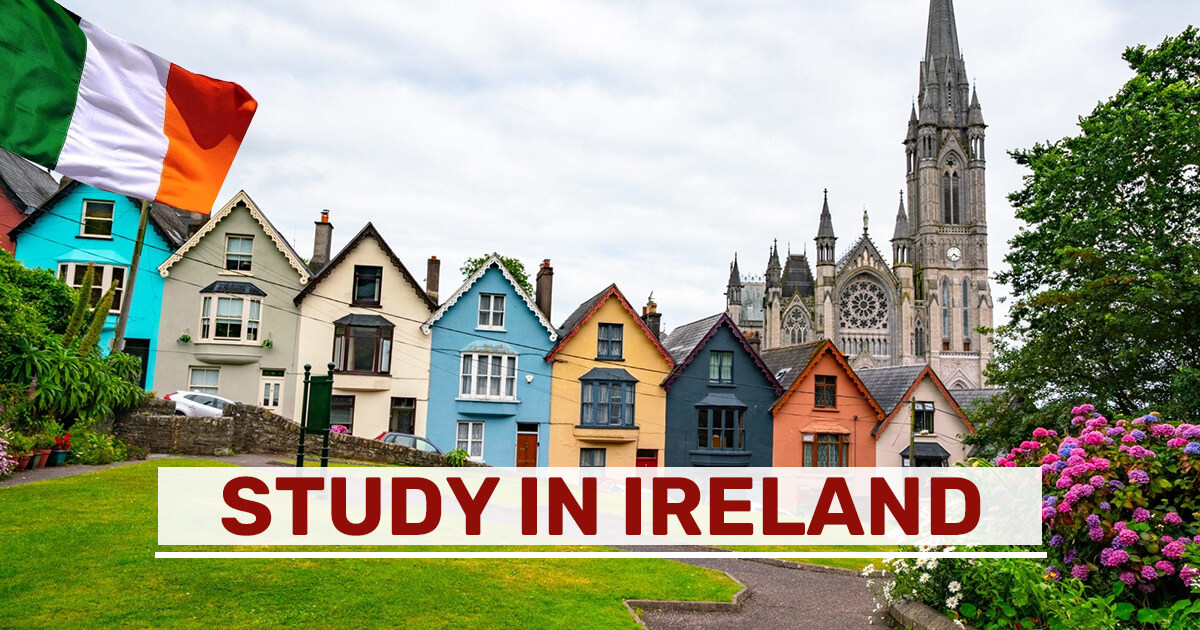
Planning to Study
in Ireland? We aim to serve students who are keen to study in Ireland.
INTRODUCTON:
Ireland is one of the ideal study destinations you
may think about if you want to pursue your higher education in Europe. Numerous
students are drawn to Ireland each year for a variety of reasons, including the
thousands of programmes offered by Irish universities at every level. Its
uniqueness is increased by its location, which lies on the northwest periphery
of Europe. Students from all backgrounds can pursue undergraduate, graduate,
and doctoral degrees in the nation. To enrol in Irish universities, students
must satisfy the university's admission standards.
IRELAND
EDUCATION SYSTEM:
Ireland’s long and honourable tradition in educational excellence is
recognized the world over. Dating back to the Middle Ages, Ireland held the
position of one of the principal education to the western world. Responsibility
for education lies within the Department of Education and Science. It
administers all aspects of education policy including curricula, syllabi and
national examinations. Education is free in the vast majority of primary and
secondary schools, and at undergraduate level, and is compulsory from 6-15
years.
TYPE
OF EDUCATION:
Ø One-Year
Certificate: 1year full-time course.
Ø National
Certificate: 2 years full-time course.
Ø National
Diploma: 1 year after National Certificate.
Ø Bachelor’s
Degree: Normally 3 or 4 years course.
Ø Graduate
Diploma: Usually 1 year.
Ø Masters
Degree: Either by research or through a taught programme-1 or 2 years duration.
Ø
Doctorate (PhD): Usually takes a minimum of 3 years
of original research.
Ø
The Irish Education System is traditionally divided
into three basic levels: Primary (8 years); Secondary (5 or 6 years) and Third
level which offers a wide range of opportunities from post-Secondary courses,
to vocational and technical training, to full degree and the highest
post-graduate level.
Good
Reasons to Study in Ireland:
1) Outstanding Education System:
Ireland's
exceptional educational system is built on a commitment to excellence, which is
popular among students worldwide.
2) People
and Culture:
Ireland's
university campuses showcase a beautiful blend of traditions, cultures, and
ethnicities, enabling greater tolerance and inclusion.
3)
Globally Renowned Universities:
Numerous top-ranked
universities may be found in Ireland, renowned for its intellectual power and
excellent education.
4) Ireland
Encourages Entrepreneurial Effort:
The Irish government
has developed several innovative programs to help students transform their
ideas into successful enterprises.
5)
Students can take up Part-time Jobs:
With a stamp 2
visa, working part-time for up to 40 hours per week during holidays and 20 hours
per week during the school year is permissible.
6) Affordable cost of living:
Ireland has a
variety of affordable housing alternatives, and many colleges provide on-campus
housing for students.
7) Ireland Visa Requirements are Simple:
Irish immigration
has ties with a select few nations that streamline the application process for
student visas to study in Ireland.
8)
Several courses offered in English Language:
The fact that most
courses are offered in English is one of the most substantial reasons to study
in Ireland.
9) University
ranking:
Irish universities
consistently place better on global university rankings and are regarded as
some of the best in the world. Employers and prestigious businesses around the
world hold graduates of Irish universities in high regard.
10) A healthy economy:
Ireland's economy
is one of the fastest growing in the world and is currently ranked sixth. It
offers its pupils a wide choice of professional prospects with connections
across the globe.
11) Stay-back permit:
After receiving
their degrees, most students worry about their visas. But for graduate and
postgraduate students, this nation offers a one- and two-year stay back visa,
respectively.
12) Job Opportunities:
Students who have
majored in fields like software development, IT, engineering, finance, food and
agriculture, pharmaceuticals, etc. have a good chance of landing a respectable
position with a high salary.
Reasons
to Study in Ireland through :
Ø
Analyze Student Profile.
Ø Tie-up
with Ireland's Best Universities.
Ø Easy
Application Process.
Ø
Scholarship expert guidance.
Ø Drafting
and Editing SOP/LOR.
Ø Visa Approval rate is 100%.
Ø Connect with alumni for future prospects.
GENERAL
INFORMATION ON IRISH VISAS:
Although a visa is a form of pre-entry clearance, it does not guarantee
entry to the State. Immigration officers at point of entry are entitled to deny
access and to question students regarding their bona fides.
Accordingly, it would be in everyone’s interest if school could make arrangements
to be represented at points of entry, particularly where they believe the
student’s standard of English may be poor. It would also be sensible for either
the school or the student to have on hand copies of any supporting
documentation, which have been lodged in support of the Visa application.
PROCESSING
TIME:
This process normally takes 8
weeks.
WHERE AND
HOW TO APPLY:
All student visa applications must be made through the embassy of
Ireland, New Delhi. An initial on-line application is made before documents are
sent to the visa facilitation service It is not necessary to present your
applications in person and you may apply through an agent.
INTERVIEWS:
It is unusual for Nepalese
students to be called for interview.
VISA
FEES:
The visa
fee for student visas is Rs.4000 IRPS. Payment should be made in the form of a
demand draft made payable to the Embassy of Ireland, New Delhi. The fee is
non-refundable.
RIGHT TO
APPEAL:
You can appeal within two months
of the date of refusal.
VALID
PASSPORT:
There
should be no less than 6 months validity on the passport from the date of the
course’s completion. If available, copies of previous passports exhibiting the
immigration history of the applicant should be provided. All pages, not just
those with valid visas must be included.
EVIDENCE
OF COURSE:
The college should provide an original letter, indicating that the
person has been accepted on a full-time course of education (specify subject)
entailing 15 hours or more study in a privately funded course. Provisional
letters offering a place are not acceptable The college must be in a position
to satisfy the Department of its educational and other credentials. Recognition
by the Department of Education through ACELS meets the criteria.
FEES:
Evidence must be supplied that the course fees have been paid in full.
However while this is desirable, it is not expected that an applicant pay more
than € 6,500 prior to visa approval. Evidence of payment may be incorporated
into the above evidence of course letter which should include accommodation,
fees and other relevant charges.
PRIVATE
MEDICAL INSURANCE:
Every student should have full private medical insurance. Evidence of
such insurance cover will be taken to be the Letter of Acceptance provided by
the college, university or other educational institution.
This Letter of Acceptance will contain details of the insurance cover
taken out on behalf of each student by the host school, college, university or
other educational institution on behalf of the student.
Alternative evidence will be taken to be a Certificate of Private
Insurance taken out by the student in his or her own country prior to travel.
Persons attending a course of study of a least one academic year in duration
are entitled to public health services in Ireland under the terms of Department
of Health guidelines on ordinary residence.
FAMILY
MEMBERS:
Applicants should disclose details of family members who are already
residing in Ireland or in other EU countries. For this purpose family members
include first cousins, aunts, uncles, nieces, nephews or grandparents.
CURRICULUM
VITAE:
The applicant MUST include a brief CV giving all details of educational and employment history from the time he left school to the present. It is important to account for all time between leaving school and present, therefore exact dates should be given for educational courses undertaken, jobs held, periods of unemployment etc. A sample CV is attached at the back of this document.
ABOUT
IRELAND:
Although Ireland has a rich and distinctive history, it is a truly
modern nation. In more recent years the economy has experienced unprecedented
growth – especially in IT, biotechnology and international finance – and it has
one of the highest economic growth rates in the world. Many students help
support their studies by working 20 hours per week during semesters and 40
hours per week during vacations. The minimum wage in Ireland is 8.65 Euros per
hour and after graduation there are work permit and green card opportunities,
which can lead to PR.The population of the Republic of Ireland is 4.5 million
with around 1.5 million living in the capital city, Dublin.
Dublin is a young, vibrant and cosmopolitan city and has been named as
Europe’s city of culture. It is a compact city with all modern amenities close
at hand and a low crime rate when compared to other major cities around the
world.
Irish people have a great love of conversation and a genuine interest in
other people. They have become renowned for their friendliness and hospitality.
This added to the country’s striking natural beauty contributes to the ease by
which international students adapt to the Irish way of life.
As an independent English-speaking country situated on the western edge
of Europe, the Republic of Ireland is an increasingly popular destination for
students from all over the world. The under-graduate and post-graduate degrees
awarded in Ireland have the highest international recognition and stand among
the best in the world.
GEOGRAPHY
& CLIMATE:
Ireland enjoys a temperature & climate influenced by the relatively
warm waters of the Gulf Stream in whose path the island lies. During the winter
temperatures rarely drop below freezing and snow is uncommon. The coldest and
wettest months are December, January and February. July and August are the
warmest months.
CURRENCY:
The official currency of Ireland
is Euro.
MAJOR
CITIES:
Dublin, Cork, Waterford, Galway,
Limerick.
SPORTS:
Soccer
and Rugby.